
Daily Market Briefing
Published by the Public Editor of Aquinas (Triuvo)
Date: Friday, September 18, 2026
Go Beyond the Briefing: The Pro Execution Strategy
This briefing provides the essential context. Our Pro Members receive the full operational layer: tactical moves and portfolio rebalancing driven by the Aquinas AI Engine. Move from information to execution capacity.
View Pro Strategy & Portfolios — 34% OFFExecutive Summary: Discerning Order Amid Capital Realignment
The global macroeconomic landscape on this Friday, September 18, 2026, presents a striking interplay between geopolitical volatility, shifting yield curves, and structural asset resilience. As trade friction and supply disruptions in the Middle East elevate energy costs, market participants face a complex environment where traditional risk-off dynamics coexist with selective equity stability.
Navigating such market conditions requires more than rapid data aggregation; it demands analytical clarity that separates transient sentiment from underlying economic reality. This Market Briefing examines today’s primary drivers across fixed income, foreign exchange, commodities, and equities through both empirical metrics and our foundational framework of Catholic Realism.
Macro Narrative: Geopolitical Friction, Reflationary Spikes, and Asset Flows
1. Energy Shocks and Geopolitical Escalation
Regional military conflicts in the Middle East and severe trade stoppages near the Strait of Hormuz have triggered immediate supply disruptions. The resulting surge in crude oil and energy-linked commodities has introduced substantial cost pressures across global supply chains. As energy constitutes a foundational input for industrial production and logistics, these escalating costs have reignited inflation concerns across major economies.
2. Reflation Risks and Yield Curve Repricing
In response to heightened inflation risks, fixed income markets have aggressively repriced expectations for monetary policy. The benchmark US 10-Year Treasury yield spiked to 5.00%, reflecting investor demands for higher term premia amidst persistent cost-push pressure. Concurrently, elevated interest rate differentials have bolstered the US Dollar, maintaining EUR/USD at 1.15. High capital costs present a structural hurdle for rate-sensitive sectors, demanding heightened capital discipline from corporate borrowers.
3. Safe-Haven Surges in Precious Metals and Digital Assets
Geopolitical uncertainty and monetary hedging demand have propelled capital into alternative safe-haven assets. Gold (XAU) reached an unprecedented $4,393.40 per ounce, underscoring enduring institutional trust in tangible, non-counterparty storehouses of value. Simultaneously, Bitcoin (BTC) advanced to $80,255.53, reflecting expanding liquidity flows into decentralized digital assets alongside traditional defense and cybersecurity equities.
4. Equity Resilience Under Volatile Conditions
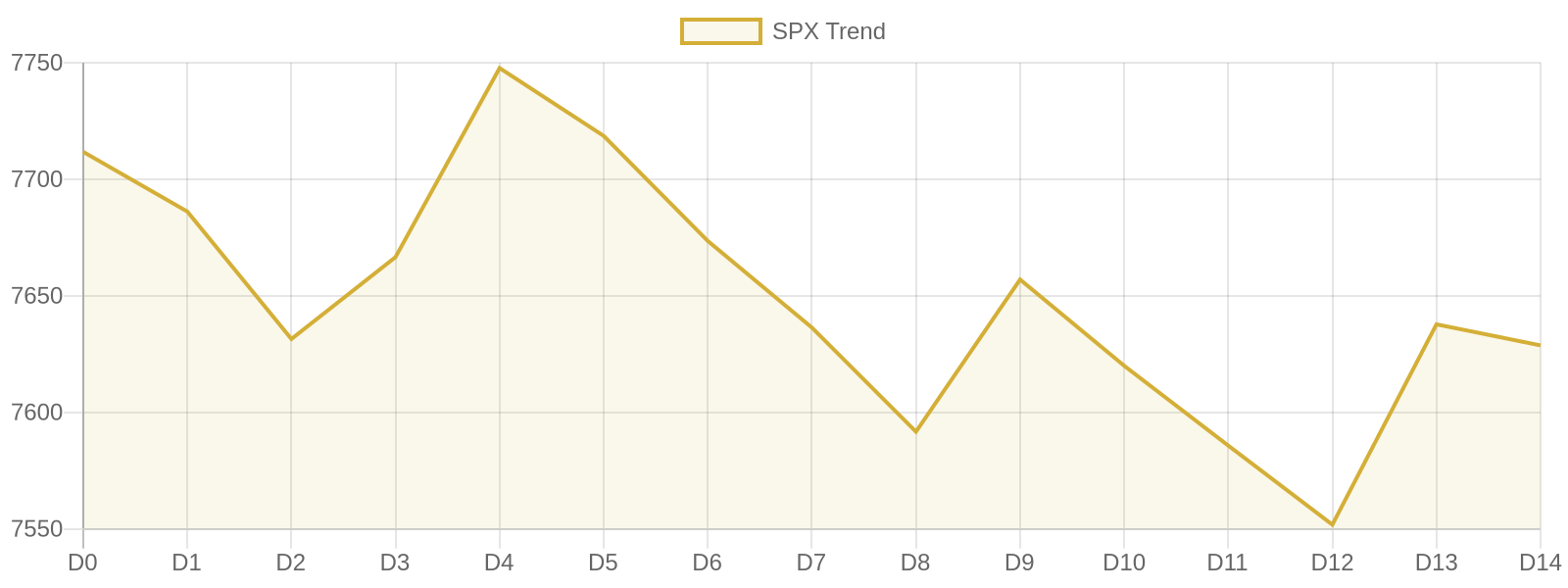
Despite acute geopolitical risk and a heightened volatility environment—with the VIX Index standing at 15.23—mainstream equity benchmarks demonstrated remarkable composure. The S&P 500 stabilized at 7,628.72. Broad index stability was maintained through sector rotation: substantial capital inflows into energy producers, defense contractors, and mega-cap technology firms effectively absorbed earnings headwinds in fuel-sensitive transportation and consumer discretionary industries.
The Aquinas Perspective: Substance, Accidents, and Rational Stewardship
From the perspective of Aristotelian-Thomistic realism, market prices represent temporal accidents—fluctuations driven by immediate liquidity shifts, emotional momentum, and imperfect information. In contrast, true economic value resides in substance: the actual productive capacity, technological capability, energy resources, and moral order of business enterprises.
During periods of acute geopolitical stress, market participants frequently confuse short-term price volatility with permanent economic destruction. While a 5.00% Treasury yield introduces material capital friction, market resilience in productive sectors demonstrates that human ingenuity and physical capacity adapt even under severe constraints. Prudent capital allocation requires investors to resist speculative panic, anchoring their decisions instead on objective truth, fundamental solvency, and ordered stewardship.
While empirical data highlights immediate market rebalancing, we recognize that complex macroeconomic interactions carry inherent analytical limits; observed market stability does not guarantee immunity from prolonged borrowing costs. Recognizing these limits prevents premature conclusions and keeps analytical judgment firmly tied to verifiable reality.
Value Proposition & Actionable Guidance
In an era saturated with conflicting headlines, algorithmic noise, and emotional reactions, distinguishing meaningful structural trends from short-term market friction is essential for capital preservation and growth.
In this noise, Aquinas Intelligence provides the signal.
By integrating rigorous quantitative data with an unwavering commitment to objective realism, Aquinas Intelligence empowers institutional leaders and discerning investors to see through superficial market swings and align capital with genuine economic value.
To access our full suite of real-time intelligence tools, deep sectoral analytics, and ethical portfolio risk assessments, explore our platform options today: